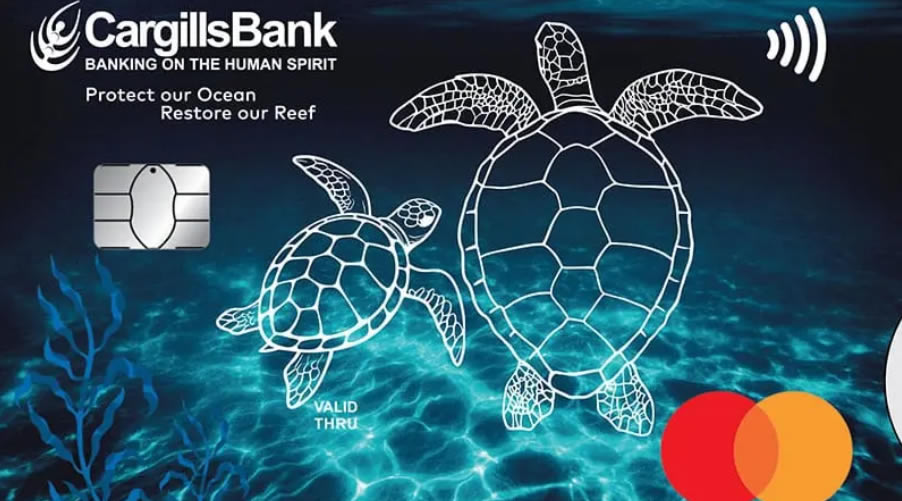





Cargills Bank, together with Mastercard, has unveiled Sri Lanka’s first debit card made from recycled ocean-bound plastic, marking a significant step towards incorporating sustainability into everyday banking. The innovative card is manufactured using recovered plastic collected from the Indian Ocean region, including the Maldives and the Dominican Republic, highlighting the bank’s commitment to environmentally responsible banking practices.
The initiative reflects Mastercard’s continued efforts to support financial institutions in developing innovative payment solutions that promote environmental sustainability while responding to changing customer expectations. By transforming recycled ocean-bound plastic into a commonly used payment card, the partnership demonstrates how environmentally conscious practices can become part of everyday financial transactions.
For an island nation such as Sri Lanka, protecting marine ecosystems and coastal environments is essential to long-term economic and environmental sustainability. Through this initiative, Cargills Bank and Mastercard aim to draw greater attention to the challenges of ocean pollution, encourage responsible resource management and promote the adoption of circular-economy practices.
Despite its sustainable material composition, the new debit card offers the same security, durability and payment convenience expected from a conventional card. It also benefits from Mastercard’s extensive global payment acceptance network. The card was developed in partnership with Lake House Printers and Publishers PLC, whose technical capabilities and manufacturing expertise played an important role in bringing the product to market.
The collaboration represents a combination of financial services, global payment technology and local manufacturing expertise, demonstrating the potential of partnerships across industries to deliver meaningful environmental solutions. It also marks an important development in introducing sustainable payment alternatives to Sri Lankan consumers.
Commenting on the launch, Senarath Bandara, Managing Director and CEO of Cargills Bank, said: “Introducing Sri Lanka’s first ocean plastic debit card marks another important milestone in our journey towards sustainable banking and responsible innovation. We recognise that even the products customers use in their everyday banking activities can play a role in supporting environmental sustainability. Through this initiative, we are taking practical steps to embed environmental responsibility into our customer offerings. We are delighted to have partnered with Mastercard and Lake House Printers and Publishers PLC to bring this initiative to life.”
Pearson BTEC Connect South Asia strengthens collaboration between education and industry to develop career-ready skills
Pearson BTEC Connect South Asia promotes stronger links between education and industry to develop future-ready talent
Pearson, a global lifelong learning company, hosted BTEC Connect South Asia under the theme “Skills That Shape the World”, bringing together approximately 150 education and industry representatives from Sri Lanka, India and the Maldives. The gathering focused on the importance of developing practical and transferable skills to equip learners for an increasingly dynamic and evolving employment landscape.
Addressing the skills and employment gap
Youth unemployment in Sri Lanka stood at 18.6% of the labour force aged 15–24 in 2025, according to World Bank data based on modelled estimates from the International Labour Organization (ILO). Nearly one million young people are expected to enter the country's workforce over the next decade, while projections indicate that only around 300,000 formal employment opportunities will be available. Meanwhile, businesses continue to face difficulties recruiting candidates with the necessary skills, leaving many graduates unable to secure employment that aligns with their qualifications.
Against this backdrop, BTEC Connect South Asia provided a platform for educators and industry representatives to discuss ways of bridging the gap between academic qualifications and workplace requirements. Discussions highlighted the importance of practical, industry-aligned education and transferable competencies, including communication, problem-solving and adaptability, in helping young people successfully transition into employment.
The discussions also aligned with Sri Lanka’s Technical and Vocational Education and Training Sector Strategic Framework 2026–2035 and its related skills development programme, which prioritises training in key sectors such as engineering, information and communications technology (ICT) and renewable energy.
Jane Baker, VP, UK & International, Enterprise Learning & Skills at Pearson, said: “Sri Lanka’s young people don’t lack talent or ambition. Too often, they lack the chance to prove it. Pearson BTEC qualifications change that. Learners build skills by doing real work and solving real problems, so they graduate job-ready and confident. With nearly a million young people set to enter the workforce, institutions and employers must work together to make sure every one of them is ready for their next step.”
A key highlight of the event was a panel discussion titled “Ready Institutions: Building Talent for an Unpredictable World”. The session examined how educational institutions can adapt to changing workforce demands and prepare students for emerging career opportunities.
The panel featured Supun Weerasinghe, CEO of Dialog Axiata PLC; Dr. Nizam Razaaq, Chairman of SLANSHEI; Dr. Harsha Alles, Chairman of Gateway Group; and Christopher John, CEO of KCIC, India. Discussions centred on the growing influence of artificial intelligence (AI) on graduate skill requirements and the need for educational institutions to continuously evolve to meet the demands of future industries.
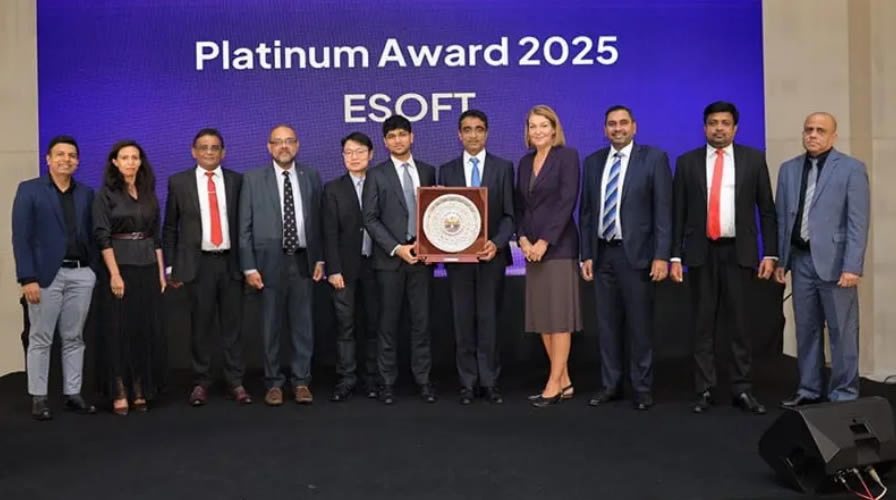
Recognising the contribution of institutions in advancing practical and career-oriented education, Pearson also presented 12 awards to Pearson BTEC centres across the region. The awards celebrated institutions demonstrating a commitment to skills-based learning and preparing students for employment. Among the recipients, ESOFT received the Platinum Award, while the British College of Applied Studies (BCAS) was recognised with the Gold Award.
Cargills Bank and Mastercard Partner to Launch Sri Lanka’s First Ocean Plastic Debit Card