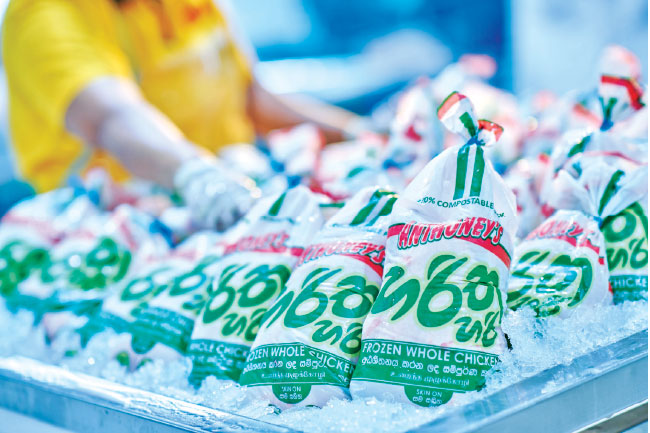
World Food Day, observed annually on October 16, provides an opportunity to reflect on global food security and the people and systems responsible for feeding communities. This year’s theme, ‘Innovate Today to Feed Tomorrow’, highlights the importance of innovation in building resilient food systems. For Sri Lanka’s poultry industry, this extends beyond technology and production costs to include animal nutrition, responsible farming practices and consumer confidence.
Addressing the Global Food Challenge
According to the Food and Agriculture Organization (FAO), approximately 673 million people worldwide experienced undernourishment in 2024, representing 8.2% of the global population. In Southern Asia, the prevalence of undernourishment declined from 7.9% in 2022 to 6.7% in 2024. Despite this progress, food insecurity remains a significant challenge for millions of people.
Poultry products, particularly chicken and eggs, provide accessible sources of protein and essential nutrients for households seeking affordable, nutritious food. Ensuring a reliable supply of these products therefore requires attention not only to production volumes but also to the quality of feed, farming methods and standards maintained throughout the production process.
Sri Lanka’s poultry industry has recorded notable production growth. According to the Department of Animal Production and Health (DAPH), poultry meat production increased from approximately 236,110 tonnes in 2023 to 258,540 tonnes in 2024. Egg production also rose from around 2,044 million to 2,953 million over the same period.
While this growth demonstrates the sector’s capacity to expand, long-term food security also depends on the industry’s ability to maintain reliable production, manage resources efficiently and uphold responsible farming practices.
Rethinking Innovation Through Animal Nutrition
Feed remains a critical factor in poultry production, influencing costs, productivity and the stability of the supply chain. Government estimates published in 2022 placed Sri Lanka’s annual maize requirement for animal feed at approximately 700,000 tonnes. However, domestic maize production across the two cultivation seasons in 2024 totalled 223,497 tonnes, according to DAPH, leaving the country reliant on imports to meet a substantial portion of its requirements.
Ceylon Chamber Leads Business Delegation to Indonesia to Strengthen Trade and Investment Ties
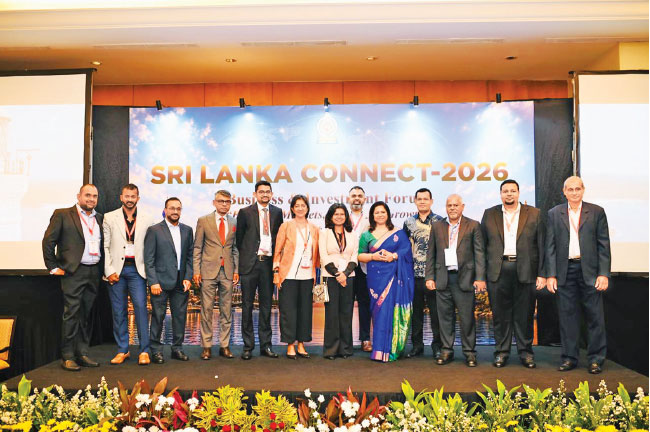
The Ceylon Chamber of Commerce conducted a Business Promotion Mission to Jakarta, Indonesia, from October 13 to 17, 2026, aimed at strengthening bilateral business relations and identifying new opportunities for trade, investment and private sector collaboration between Sri Lanka and Indonesia.
The delegation was led by Sheamalee Wickramasingha, Chairman and Group Managing Director of CBL Group, and included representatives from CBL Global Foods Limited, Silvermill Group, Antler Fabric Printers (Pvt) Ltd, Dinamore (Pvt) Ltd, Macksons Holdings (Pvt) Ltd and The Ceylon Chamber of Commerce.
As part of the programme, the delegation participated in Trade Expo Indonesia (TEI) 2026, where members engaged with potential business partners and explored Indonesia’s export capabilities. The mission also featured meetings with Indonesia’s Ministry of Trade, the Indonesian Employers’ Association (APINDO) and the Indonesian Food and Beverage Association (GAPMMI) to discuss avenues for stronger commercial engagement and increased bilateral trade.
A major highlight of the visit was the signing of a Memorandum of Understanding (MoU) between The Ceylon Chamber of Commerce and the Indonesian Chamber of Commerce and Industry (KADIN Indonesia). The agreement provides a framework for closer institutional cooperation, including facilitating business-to-business connections and promoting trade and investment opportunities in both countries.
The delegation also attended Sri Lanka Connect 2026 in Jakarta on October 16. Discussions during the event included a meeting with Nurul Ichwan, Indonesia’s Deputy Minister of Investment Promotion, to explore potential investment opportunities and strengthen economic cooperation between the two nations.
The mission concluded with a dinner hosted by Sashikala Premawardhana, Sri Lanka’s Ambassador to Indonesia and ASEAN, offering another opportunity to discuss ways to advance bilateral business relations.
The Ceylon Chamber of Commerce expressed its appreciation to Sashikala Premawardhana and Dewi Gustina Tobing, Ambassador of the Republic of Indonesia to Sri Lanka, as well as officials from both diplomatic missions, for their support in coordinating the programme and facilitating engagements with Indonesian institutions and business organisations.
New Anthoney’s Farms Champions Future Food Innovation with ‘Innovate Today to Feed Tomorrow’